Today at this beach
Tide coming in
High tide at 12:16 · 1.8 m · Pernambuco time (UTC-3)
InterpretationPartial window for the natural pools today, from 04:01 to 07:31, around the 06:01 low tide (0.5 m). Pernambuco time (UTC-3).
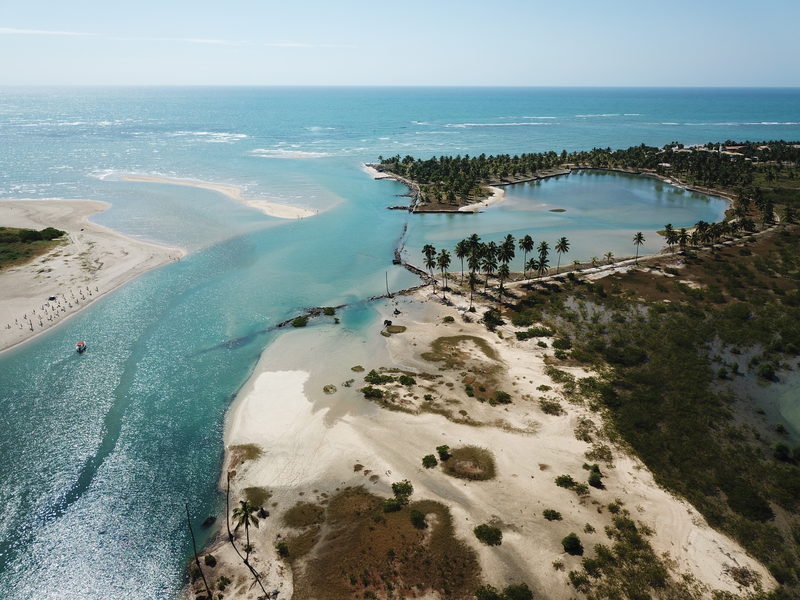
See the full tableMonthly tableMaracaípe is in Ipojuca (PE), about 3 km south of the Vila de Porto de Galinhas (the village center). It is the area's surf beach, with open sea and strong waves, a much-photographed beachfront coconut grove and, at its southern end, Pontal de Maracaípe, where the river meets the sea among mangroves.
Location and getting there
The beach is about 50 km from Recife, an hour by car. From the Vila de Porto de Galinhas you can drive there along Estrada de Maracaípe in a few minutes, or go by bicycle, by buggy or on foot along the shore: it is about 2 km to the kiosk area. The "ponta a ponta" (end to end) buggy tour starts at Pontal de Maracaípe and runs to Muro Alto, with stops at the beaches.
At the main beach there is free street parking, but there are reports of informal parking attendants charging. At the Pontal, about 6 km from the Vila, the parking lots are near the end of Rua Professora Erothides Flora Chalaça and charged R$ 10 to R$ 20 in 2025 and early 2026.
Surfing
Maracaípe and Cupe are the surfers' favorite beaches in Porto de Galinhas. It is a sand-bottom wave (beach break), with lefts and rights, and it works with a southeast swell. The beach hosted the ISA amateur world championship (World Surfing Games) in June 2000 and a CBSurf Master event in July 2017. Local instructors give lessons right on the sand.
Swimming and the sea
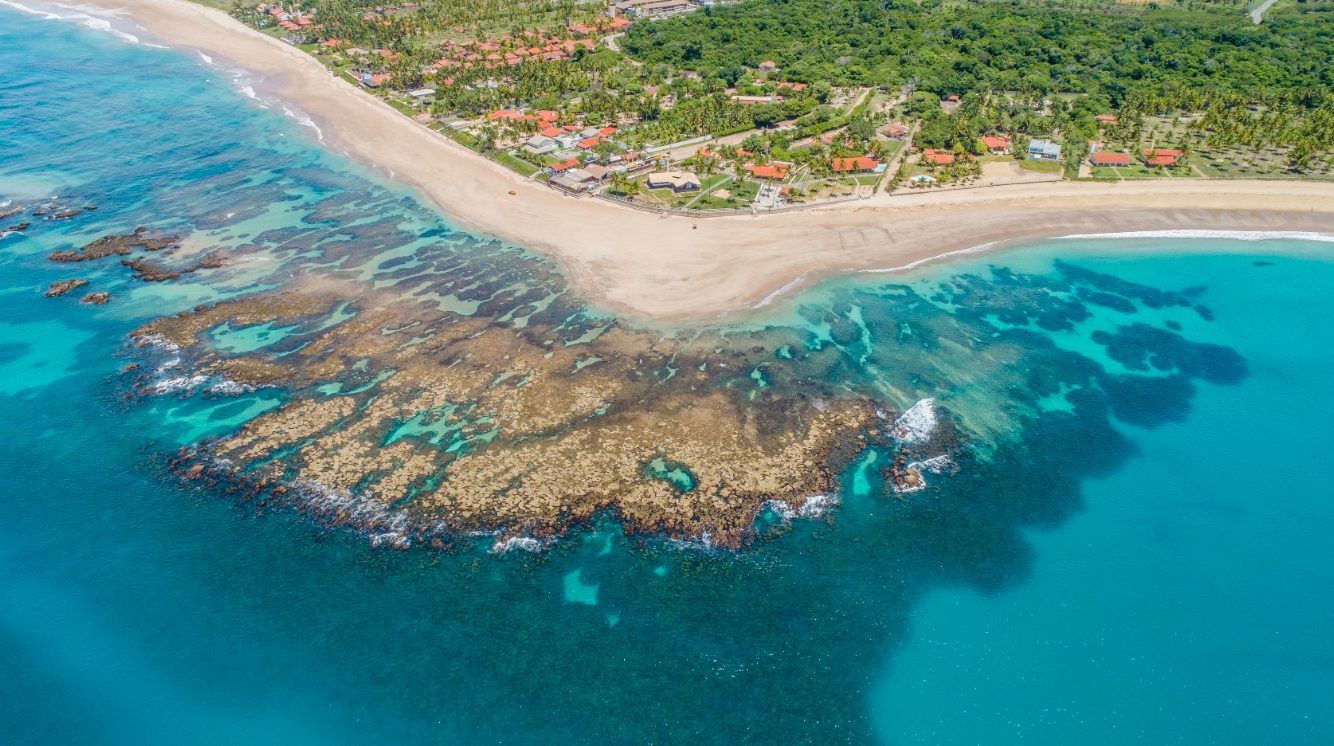
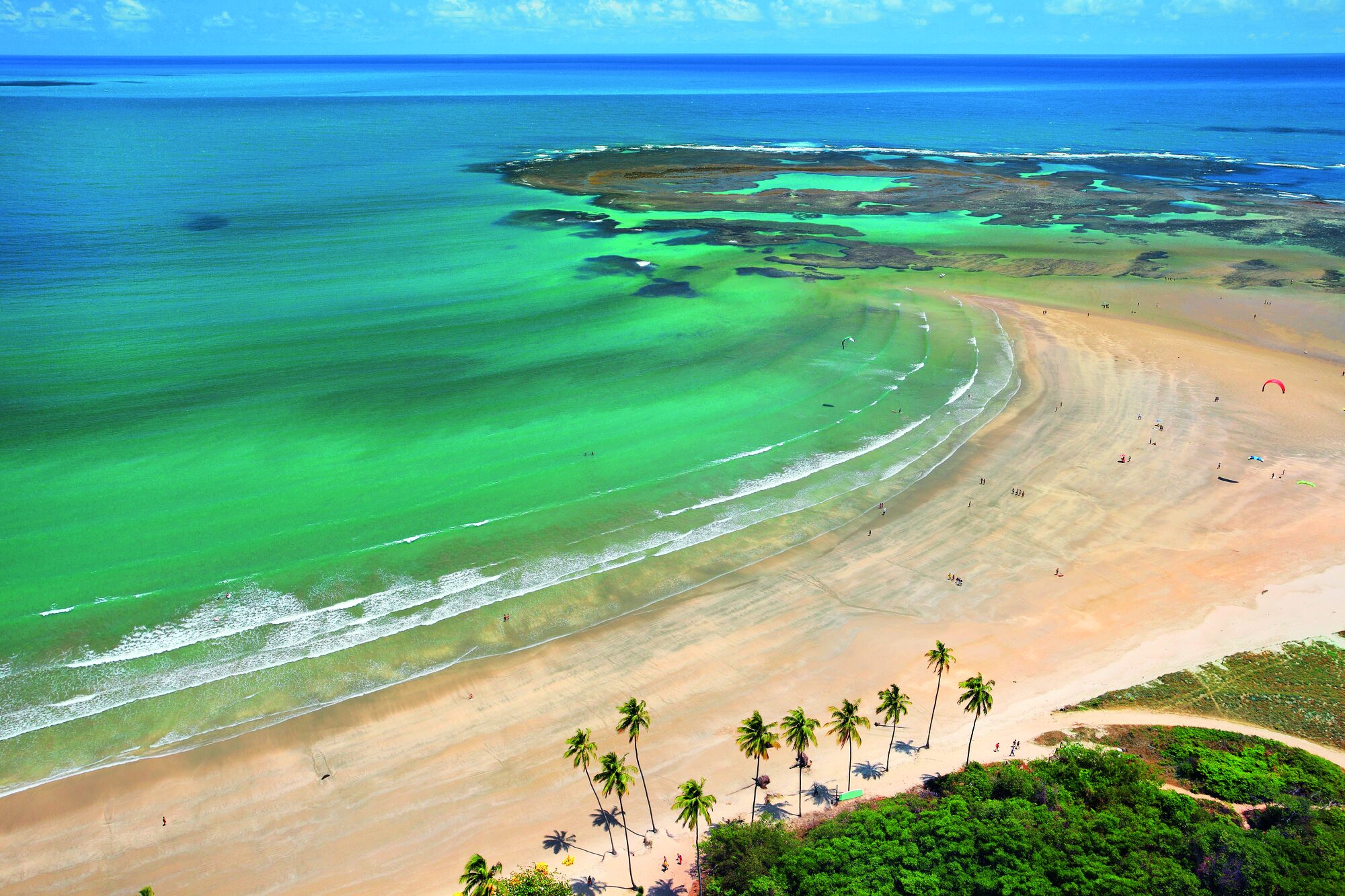
On the main stretch the sea is open, with strong waves, and there are no natural pools. It is not the best choice for small children. For calm water, the place to go is the Pontal at low tide: you can walk many meters in knee-deep water, and at the tip natural pools form when the tide is 0.0 to 0.6 m, reached by jangada, a traditional sail raft.
Lifeguards from Salvamar de Ipojuca work from 5:30 to 17:00, and flags mark the areas with currents. Check the tide table before you go.
Pontal de Maracaípe
Pontal de Maracaipe is where the Maracaípe River meets the sea, with mangroves, sandbars and a view of Serrambi on the other bank. From there, pole-driven jangadas travel through the estuary to show visitors the seahorses: the tour cost R$ 60 per person in 2025 and lasts about 1 hour. The Pontal sunset is the most famous in Porto de Galinhas; to watch it from the river, go out in the late afternoon.
The Maracaípe seahorse (*Hippocampus reidi*) is an endangered species. Some jangada operators still take the animal out of the water and put it in a jar for tourists to see, a practice researchers have linked to the population decline. Ask to watch the seahorse in the water, without removing it. The estuary lies within the Sirinhaém and Maracaípe Rivers Estuarine Environmental Protection Area (APA), created by state law in 1986, and within a municipal nature park of just over 15 hectares of mangrove, created in 2017.
Maracaípe coconut grove
Rows of coconut palms along the shore, with hammocks, swings and decorated arches for photos, and a regular stop on buggy tours. Photographers offer photos taken from the top of the palms, charged separately. Do not confuse it with Coqueiral Park, a paid water park.
Where to eat and stay
Vila de Todos os Santos, on the seafront, is where Maracaípe's restaurants are concentrated. Joao Restaurante is known for its camarão no abacaxi (shrimp served in a pineapple), which cost R$ 128 for one person and R$ 276 for two in 2025. Bar do Marcão serves prato feito (a set plate meal) for about R$ 50 (2025) and has a shower and restrooms. Quintal do Joca and the Museu do Caranguejo Vivo are also in the village.
Maracaípe does not have a nightlife scene like that of the Vila de Porto de Galinhas, but some bars open after sunset. To stay overnight, there are pousadas (guesthouses) such as Aldeia dos Anjos, Pousada dos Coqueiros, Maracabana, La Bella Luna and Xalés de Maracaípe.
Precautions
- Obey the flags and choose stretches with lifeguards. Emergency: Fire Department (Bombeiros), 193.
- Do not take seahorses out of the water, and do not take anything from the mangrove.
- Sea turtles nest at Maracaípe. Respect the nesting areas.
- Ipojuca is outside the 33 km stretch, between Paiva and Olinda, that CEMIT classifies as at risk of shark incidents.
When to go
According to APAC, the rainy season on the coast runs from April to July. From September to March the weather is usually drier, and November and December are among the least rainy months. At the Pontal, the best times are low tide, for the pools, and late afternoon, for the sunset.
Today at this beach
Tide coming in
High tide at 12:16 · 1.8 m · Pernambuco time (UTC-3)
InterpretationPartial window for the natural pools today, from 04:01 to 07:31, around the 06:01 low tide (0.5 m). Pernambuco time (UTC-3).
See the full tableMonthly tableRecommended profile
Groups of friendsRomantic couplesSolo travelersFamilies with children